Fulani Braids — Style Guide, Prices & Salons
Last updated: October 2026
Fulani Braids — Photo Gallery
 Book at Mabys Braiding Salon →
 Book at Rita’s House of Beauty, LLC →
 Book at Glam salon de beauté →
 Book at Braid Hippie →
 Book at Mary's African Hair Braiding →
 Book at Garcia East African Hair Braiding →
 Book at Ultimate African Hair Braids →
 Book at Mariama African hair braiding →
 Book at Mariama African hair braiding →
 Book at Braid Master →
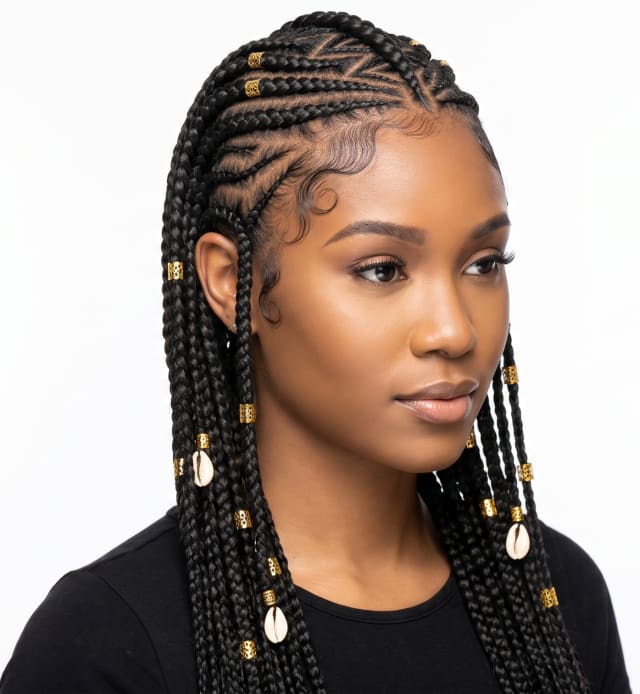
Fulani braids are a traditional African hairstyle characterized by their unique patterns and intricate designs. This style features long, thin braids that are often adorned with beads, cowrie shells, or other decorative elements. The braids can be worn in various lengths and thicknesses, providing a versatile look that can be customized to suit individual preferences. Typically, Fulani braids are parted down the middle or to one side, with some braids left loose to frame the face, while others are tightly woven close to the scalp.
The time it takes to complete Fulani braids can vary significantly based on several factors, including the stylist's experience, the thickness of the braids, and the desired length. On average, the process can take anywhere from four to eight hours. If the hair is particularly long or thick, or if the design is more intricate, it may take even longer. It is advisable to set aside an entire day for this hairstyle, especially if you are having it done for the first time. Some salons may offer consultations to discuss the design and expected time frame before starting the braiding process.
Maintaining Fulani braids is essential to keep them looking fresh and to ensure the health of your natural hair underneath. Here are some maintenance tips:
1. Moisturize Regularly: Keeping your scalp and braids moisturized is key. Use a light oil or leave-in conditioner to prevent dryness. Apply the product directly to your scalp and along the length of the braids.
2. Avoid Heavy Products: While it is important to keep your hair moisturized, avoid using heavy creams or butters that can build up and weigh down your braids. Lightweight products are best for maintaining the style without compromising its appearance.
3. Wash Carefully: If you need to wash your hair while in Fulani braids, do so gently. Use a diluted shampoo and avoid scrubbing too hard, as this can cause frizz and disrupt the braids. Rinse thoroughly and follow up with a lightweight conditioner.
4. Protect at Night: To prevent frizz and tangling while you sleep, wrap your braids in a silk or satin scarf or use a silk pillowcase. This will help maintain the integrity of the style and keep your hair moisturized.
5. Limit Styling Manipulation: Try to avoid excessive styling or pulling on the braids, as this can lead to tension on the scalp and potential hair loss. Keep styling to a minimum and allow the braids to rest.
Fulani braids can suit a variety of face shapes and hair types. They are particularly flattering for those with oval or heart-shaped faces, as the braids can be styled to frame the face beautifully. Additionally, this style works well for individuals with natural hair textures, as the braids can be done on both relaxed and unrelaxed hair. If you have a busy lifestyle or prefer a low-maintenance hairstyle, Fulani braids can be an excellent option, as they can last anywhere from two to six weeks with proper care.
This hairstyle is also a great choice for individuals looking to protect their natural hair from environmental stressors. The braiding process can help to minimize breakage and promote healthy hair growth when done correctly. However, it is important to ensure that the braids are not too tight, as this can lead to traction alopecia over time.
When considering the cost of Fulani braids, prices can vary based on location, stylist experience, and the complexity of the design. Typically, you can expect to pay anywhere from $150 to $300 for this style. Some salons may charge more for intricate designs or additional embellishments like beads or shells. It is a good idea to check with your stylist for a detailed breakdown of the costs involved and any additional fees for extra services.
Before getting Fulani braids, it is beneficial to do some research on different styles and designs. Look for inspiration photos that highlight the specific look you want to achieve. This can help ensure that your stylist understands your vision and can provide the best possible outcome.
In summary, Fulani braids are a distinctive and beautiful hairstyle that can be tailored to suit individual preferences. They require a significant time investment for installation and ongoing maintenance to keep them looking their best. With the right care, Fulani braids can be a stylish and practical choice for anyone looking to protect their hair while expressing their personal style. Whether you are preparing for a special occasion or simply want a new look, Fulani braids can offer a unique way to showcase your hair.
Most Popular Cities for Fulani Braids
Cities ranked by the number of salons listing Fulani Braids:
- Houston, TX — 13 salons
- Dallas, TX — 7 salons
48 salons list Fulani Braids on Tress Cloud. 20 of them are in Houston, TX and Dallas, TX.
Price Range for Fulani Braids
- Starting From: $160
- Up To: $245
- Average Price: $167
- Based On: 45 price listings
Fulani Braids — Frequently Asked Questions
How much do fulani braids cost?
On Tress Cloud, listed prices for fulani braids run from $160 to $245, averaging $167 across 45 listings. Final price depends on braid size, length and the salon.
Where can I get fulani braids?
48 salons list Fulani Braids on Tress Cloud. 20 of them are in Houston, TX and Dallas, TX. Choose a city on this page to see its salons.